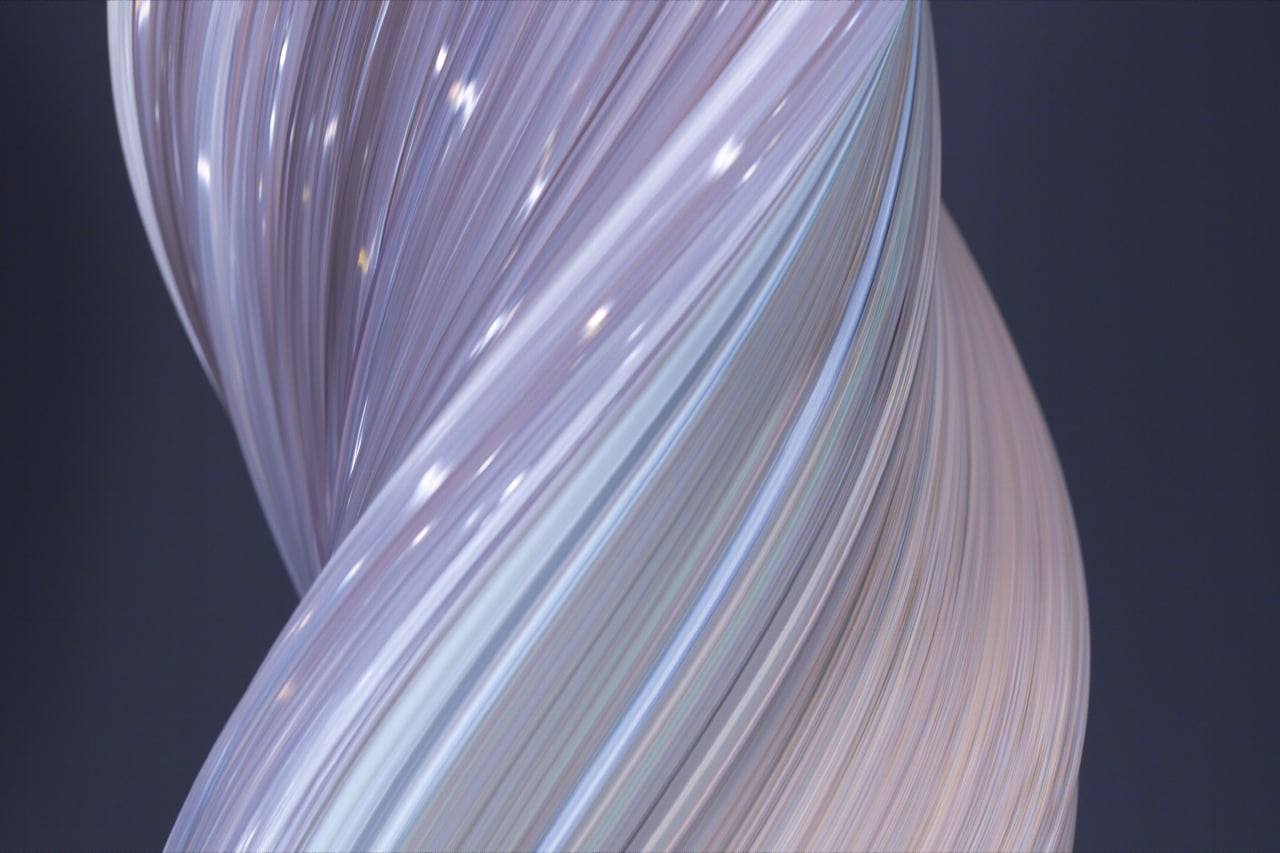
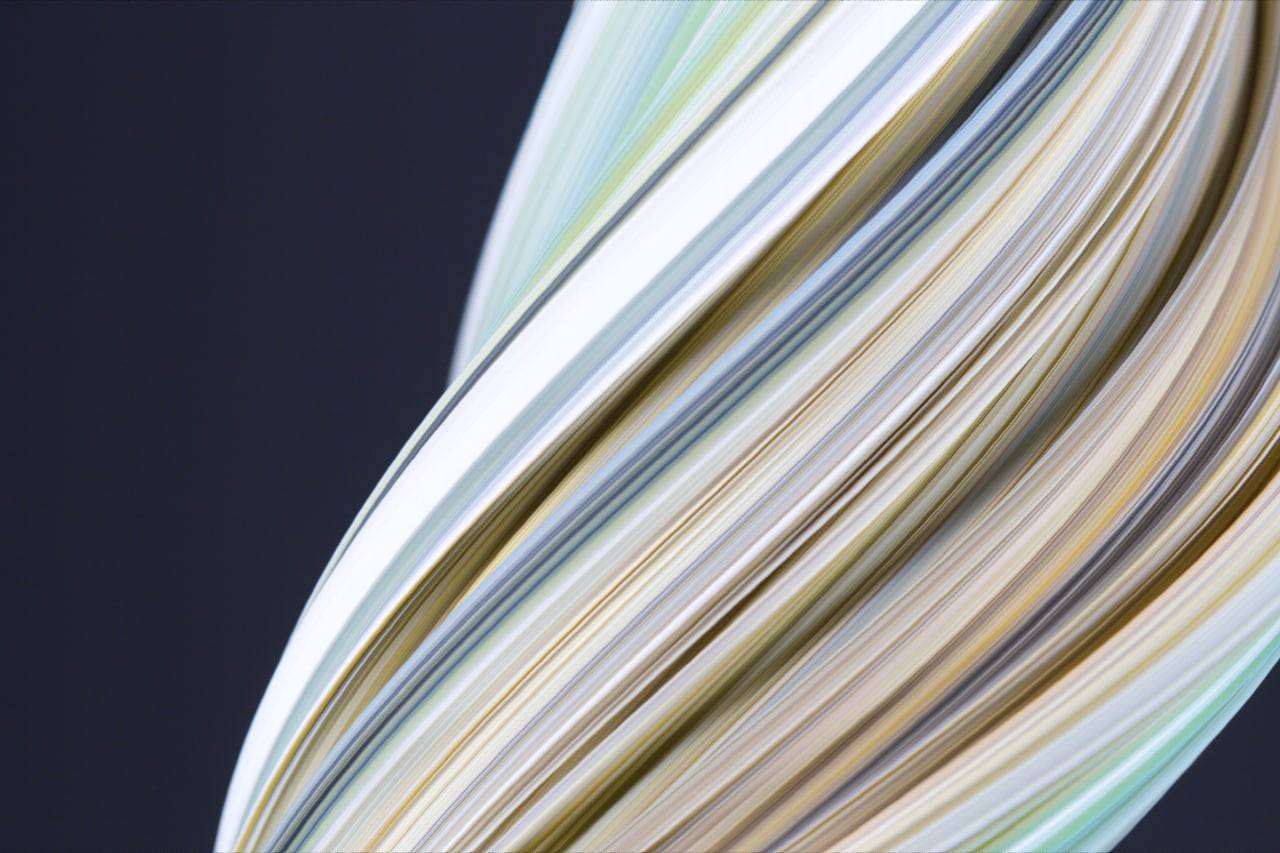
One rock, 800 frames, half a rotation. Time runs top to bottom.
Film slit-scan works by dragging a strip of film past a narrow slit while something moves in front of it, so what lands on the frame is one thin slice of the scene recorded continuously over time. You cannot really do it with a digital sensor; there is no film to drag. So I faked it. Take a long sequence of stills, pull a single row of pixels out of each one, and stack those rows in order. The result is an image whose vertical axis is no longer space. It is time.
The rock sits on a turntable that advances a fraction of a degree between exposures. I shoot 800 frames, which works out to half a rotation. From every frame I keep only the center row, one pixel tall and the full width of the sensor. Frame one becomes the top row of the final image, frame two the row beneath it, on down the whole height. The horizontal axis is still ordinary space across the rock. The vertical axis is time. Because the rock is turning the entire time, a mark on the center row drifts a little with each exposure, and stacking those rows in order smears it into a long diagonal. The stone gets pulled into taffy.
The twist is the rotation made visible. A band that spirals down the frame is a single feature on the rock caught at 800 slightly different angles across 180 degrees of turn. The taper is the shape of the rock itself, widening and narrowing as the sampled row crosses it. None of it is a filter or a warp applied afterward, and this is the part I love most: because the image is built from real photographs, it still obeys real light. The highlights sit where the light actually caught the stone, and the soft falloff is a real lens’s depth of field, not a synthetic blur. The result looks physical because it is. Every row is a real photograph of the rock at one exact angle, and the image only exists once they are all stacked.
I keep coming back to it because the input is so ordinary and the output is so unrecognizable. A rock on a lazy Susan is about the least dramatic thing you can photograph. Turn one axis of the frame into time and it comes out looking like blown glass or pulled sugar.
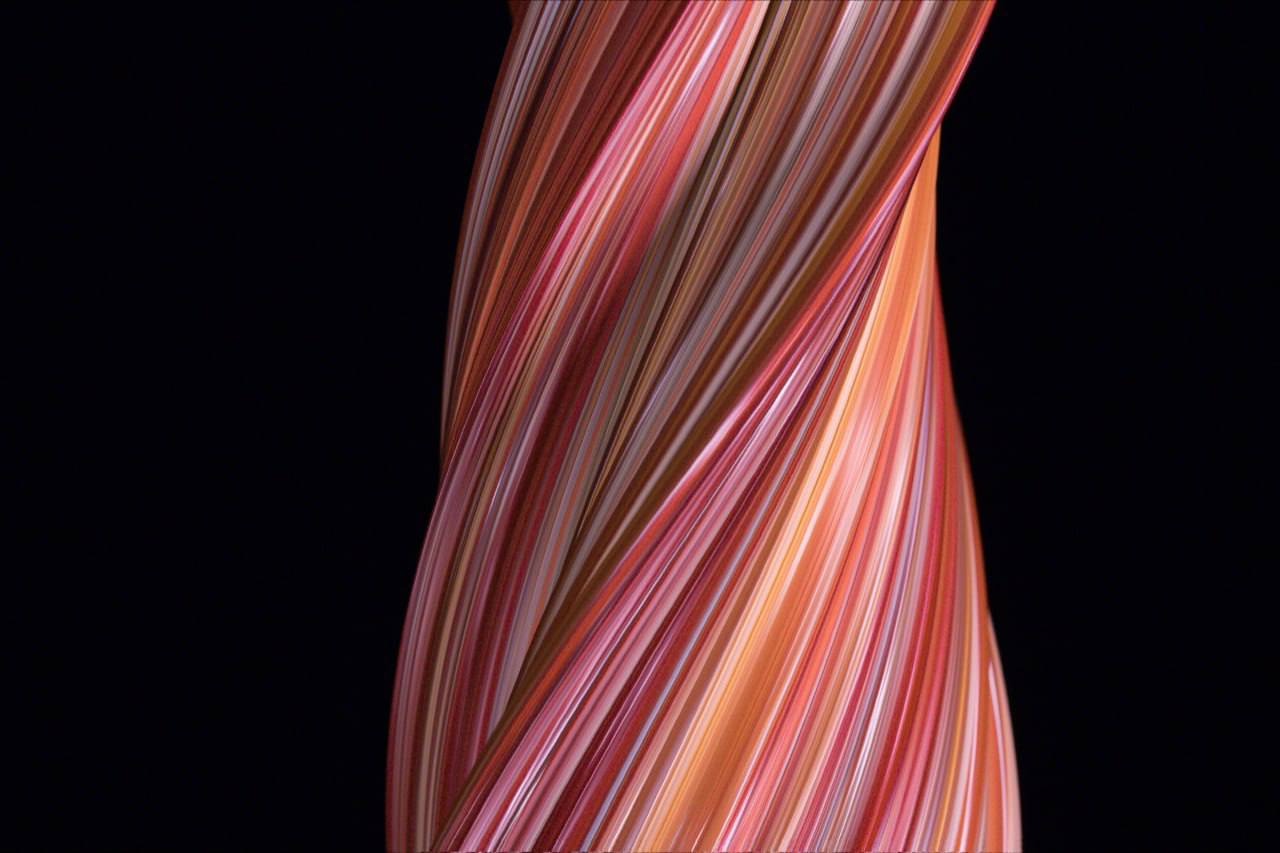
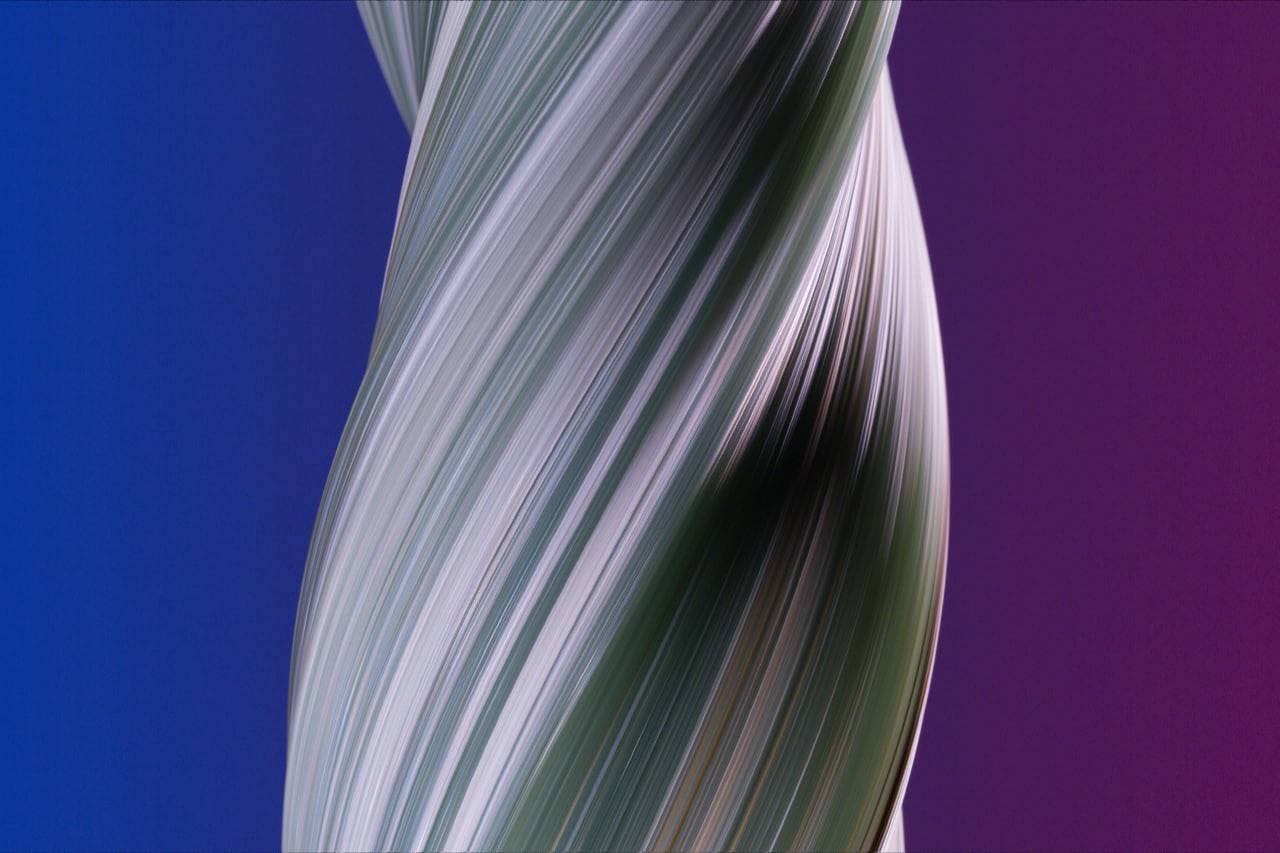
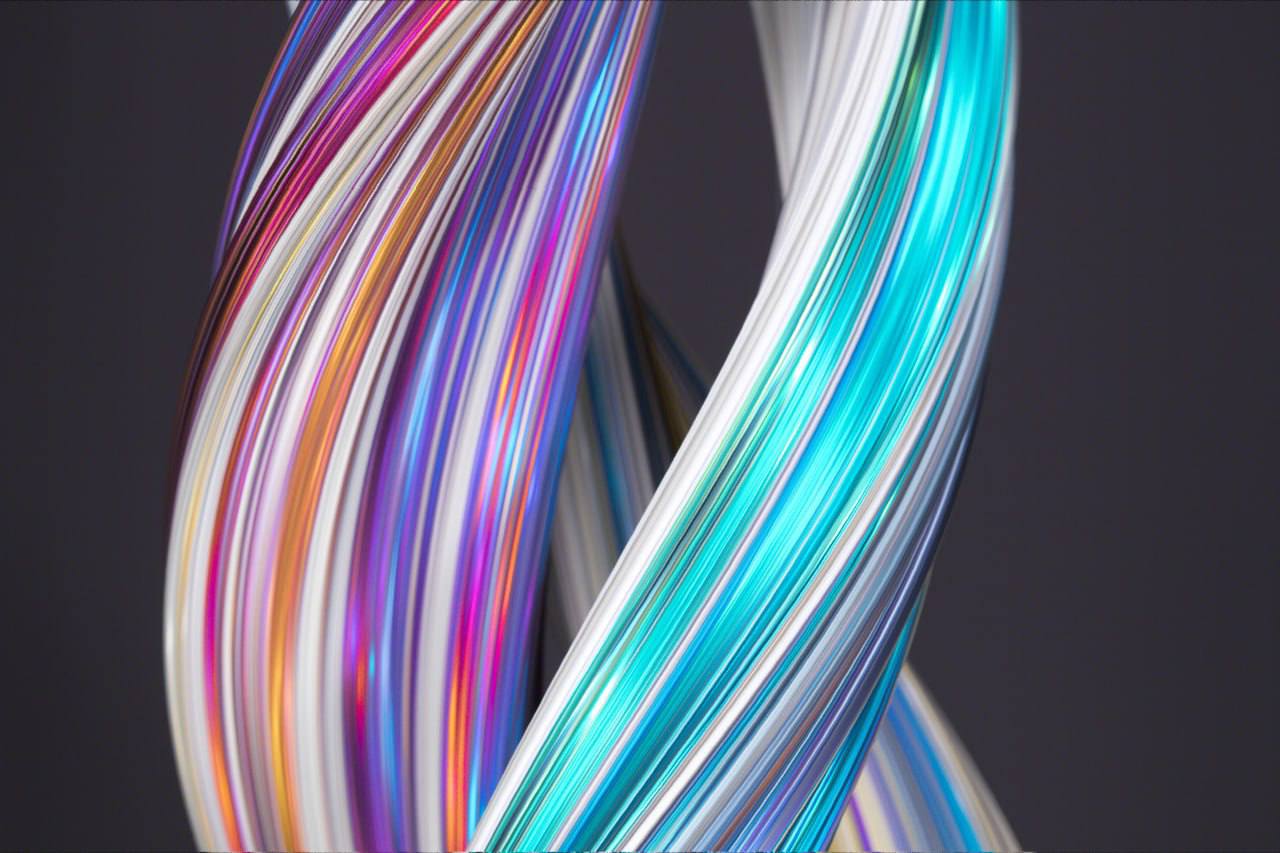
Three rocks in one pass, which is where the extra interwoven bands come from.
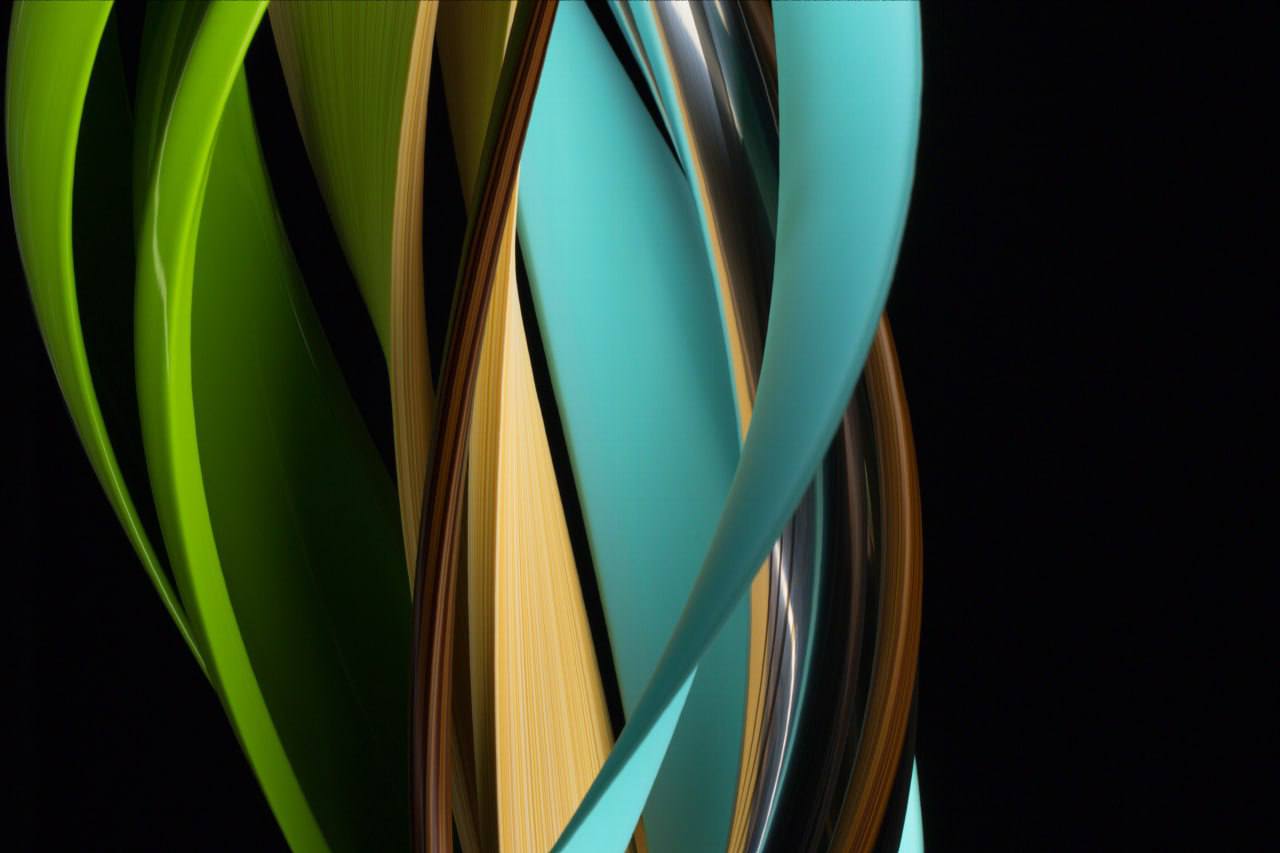
It does not have to be rocks. This one is a caddy of kitchen utensils on the same turntable. The green ladle, the wooden spatula, and the mint turner become ribbons; every color in it is a real utensil caught at a unique angle.
The subject does not have to spin, either. Here nothing was on a turntable at all. I held my phone out the passenger window of a moving car and shot video, then pulled a single column of pixels from each frame and stacked them left to right. The rotation is gone; what fills the time axis now is the car’s own motion down the road. A parked car stretches into a limousine, the wheels smear into long streaks, and the whole thing reads as one impossibly long vehicle caught mid-pass.

Filmed out a car window, one column of pixels per frame. The length is time, not metal.